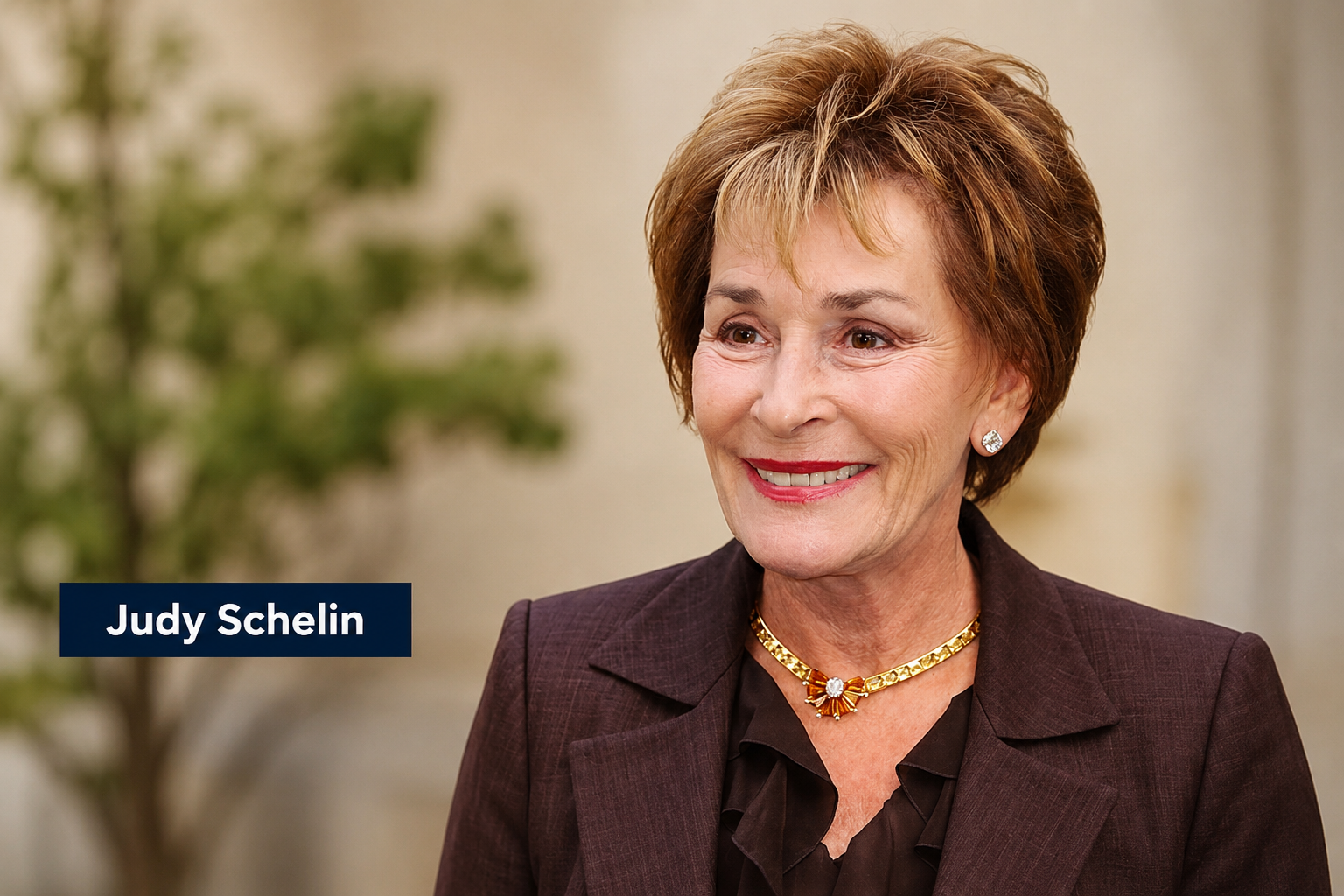

A federal bribery conviction. A name change. A job at a temple caring for infants. And a background check system that missed all of it.
That is the story of Judy Schelin, a former Florida childcare administrator whose public record has drawn renewed attention over the years, not because of celebrity, but because of what her case says about accountability, identity, and the limits of the systems designed to protect children.
Who Is Judy Schelin?
Judy Schelin, born in December 1951 in Merrill, Iowa, built her professional life in Florida’s childcare and nonprofit sector. For years, she held executive roles overseeing daycare centers and federally subsidized programs across Broward, Palm Beach, and Miami-Dade counties.
Her most prominent position was as executive director of Riverwood Youth Opportunities, a nonprofit that administered USDA-funded meal programs for approximately 200,000 low-income children. She also managed multiple daycare centers in Broward County, placing her at the center of programs handling millions of dollars in public funding annually.
On paper, she was a trusted administrator in a field where that trust carries enormous weight.
The 2010 Federal Bribery Conviction
That changed in 2010, when Judy Schelin, operating under the name Judy Perlin, pleaded guilty in federal court to accepting approximately $40,000 in kickbacks from a catering company called Diana Food Group. In exchange, she helped secure the company’s entry into a lucrative federally subsidized food program.
The misconduct occurred between 2003 and 2005, during her time administering the program. Federal investigators also found:
- Roughly $20,000 in salaries paid to family members using program funds
- Federal money used to advertise her daughter’s private business in a national publication
- Billing irregularities that state auditors had flagged years earlier, including expenses for luxury car leases and resort stays
Before the federal case, an administrative law judge had already ordered her to repay nearly $150,000 to daycare centers and the state after finding she had retained more administrative fees than state guidelines permitted.
The federal court sentenced her to two years of probation and a $3,000 fine. She also accepted a seven-year ban from participating in USDA-funded programs.
The 2015 Temple Controversy
Years later, Judy Schelin resurfaced in a role that reignited public concern.
In 2015, she worked as a teacher in the infant program at Congregation B’nai Israel, a temple in Boca Raton, Florida, caring for children as young as six weeks old. The temple listed her under the name Judy Schelin.
The temple said it followed standard procedure. Before hiring her, it conducted background checks through both the Florida Department of Children and Families (DCF) and the Palm Beach County Sheriff’s Office. Both returned the same result: no arrest history found.
The reason those checks came back clean reveals the core problem.
Her 2010 federal conviction was filed under the name Judy Perlin, not Judy Schelin. Because background checks at the time were largely name-based rather than fingerprint-based, the system simply did not connect the two identities. There was no alert. No flag. No record.
When local news outlets, including Boca News Now and West Boca News, published reports linking Judy Schelin and Judy Perlin as the same person, the public reaction was swift.
Congregation B’nai Israel later confirmed in a written statement that Schelin had also signed a sworn affidavit attesting that she had never been subject to fines or disciplinary action. The temple terminated her employment immediately after the reporting surfaced.
The temple noted that her performance with infants had been described as “superb” and that she had no access to school funds, but said the concealment of her conviction left them no choice.
What Her Case Revealed About the System
The Judy Schelin case became a reference point in policy discussions about background screening in childcare settings. Several specific problems came to light:
- Name-based checks have blind spots. If an applicant has a conviction under a former name, standard searches may miss it entirely unless all known aliases are included.
- Federal and state records are not always linked. Florida’s DCF screening did not automatically cross-reference federal criminal databases, meaning a federal felony could go undetected in a routine state-level check.
- Bribery is not always a disqualifying offense under Florida law. Officials acknowledged after the 2015 controversy that bribery, while serious, was not among the crimes that automatically barred someone from working in a daycare setting under state statute at the time.
Child safety advocates and policymakers pointed to the case as evidence that the screening system needed to require applicants to disclose all names they had used legally, and that federal and state criminal records needed to be cross-referenced more consistently.
The Public Record, Stripped Down
Here is what is confirmed by court records, local news reporting, and public documents:
| Event | Year | Detail |
|---|---|---|
| Misconduct begins | 2003 | Kickback scheme with Diana Food Group |
| Federal guilty plea | 2010 | $40,000 in bribes; name used: Judy Perlin |
| Sentence imposed | 2010 | Two years probation, $3,000 fine, 7-year USDA ban |
| Prior state order | Pre-2010 | Ordered to repay ~$150,000 to daycare centers and the state |
| Temple employment | 2014-2015 | Congregation B’nai Israel, Boca Raton infant program |
| Termination | January 2015 | Following media exposure of her prior conviction |
Where Things Stand
Judy Schelin has not appeared in any verified public record involving new legal charges since the 2015 firing. Her case is frequently cited in discussions about childcare regulation, background check reform, and what happens when institutional vetting systems fail to account for identity changes over time.
For parents, educators, and policymakers, the Judy Schelin case remains a concrete example of what gaps in screening can look like in practice, and why cross-referencing alias names and federal records matters in settings where adults are responsible for children.
The system cleared her. Local journalists did not.