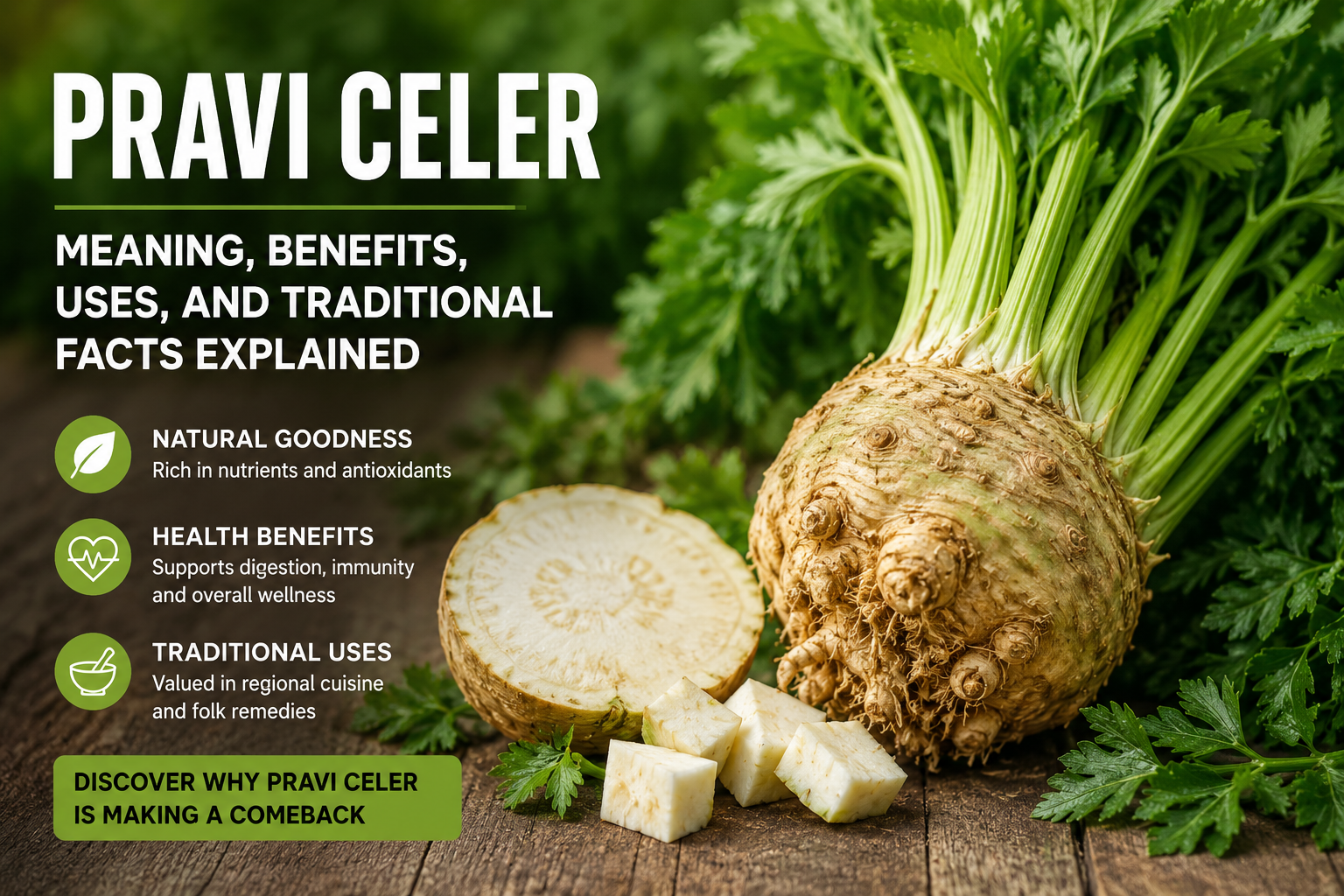

This traditional celery variety has started showing up again in food markets, home gardens, and health discussions across parts of Europe. Many people know celery from supermarket shelves, but pravi celer carries a different identity. In Balkan households and Central European cooking, it has long been tied to soups, winter meals, and home recipes passed through generations.
Search interest around the traditional vegetable has also increased as readers look for information about its health value, flavor, and traditional use. Reliable references from horticulture sources, botanical records, and regional food publications point to one thing clearly. Pravi celer is not a new food trend. It is an older form of celery with deep roots in local cooking culture.
What Is Pravi Celer?
The phrase pravi celer is commonly used in parts of the Balkans and nearby European regions to describe true or real celery. Botanical references connect it to Apium graveolens, the same plant family linked with cultivated celery and celeriac.
Regional food writers often separate this Balkan celery variety from the lighter tasting supermarket celery now common in large stores. Traditional varieties are known for a stronger aroma, deeper flavor, and wider kitchen use.
In many homes, every part of the plant is used:
| Part of the plant | Common use |
|---|---|
| Root | Soups and stews |
| Leaves | Seasoning and broth flavor |
| Stalks | Salads and cooked dishes |
| Seeds | Spice blends and herbal use |
Historical records from Mediterranean agriculture also show celery has been cultivated for centuries. Earlier versions were valued more for medicinal and aromatic qualities before becoming a regular kitchen vegetable.
Why This Traditional Celery Variety Is Trending Again
Nutrition interest has pushed older vegetables back into public discussion. This traditional celery variety has become part of that movement because it is naturally low in calories while still containing vitamins, minerals, fiber, and antioxidants.
Food researchers and nutrition databases commonly highlight:
- Vitamin K
- Potassium
- Fiber
- Water content
- Antioxidant compounds
Its strong aroma also makes it popular in slow cooked meals where vegetables are used for depth of flavor rather than just texture.
Some regional cooks still prefer traditional celery varieties over modern celery because the taste remains more intense after cooking.
Traditional Role of Pravi Celer in Balkan Cooking
In Serbia, Croatia, Bosnia, and nearby countries, pravi celer appears in classic home recipes throughout colder months.
It is often added to:
- Meat broths
- Vegetable soups
- Winter stews
- Pickled vegetable mixes
- Root vegetable dishes
Older recipes sometimes dry the leaves for later use during winter. Home cooks also combine the root with carrots, onions, and parsley to create a base for soups.
Unlike modern processed cooking ingredients, this traditional celery remains connected to simple home preparation.
Health Questions Around Pravi Celer
Interest in celery juice and plant based eating has pushed many readers to search for possible health effects connected to this traditional vegetable.
Medical and nutrition sources usually focus on several areas:
Hydration
Celery contains a large amount of water which may support hydration during warmer months.
Digestion
Fiber content may help support regular digestion when included as part of a balanced diet.
Heart Health
Nutrition databases link celery with potassium and plant compounds studied for cardiovascular support.
Low Calorie Meals
Pravi celer is often included in calorie conscious meal plans because it adds flavor without heavy calories.
Health experts still recommend balanced eating instead of relying on a single food for major results.
Difference Between Pravi Celer and Store Celery
Many readers searching for pravi celer want to know if it is actually different from common celery.
The biggest differences usually include:
| Pravi celer | Standard supermarket celery |
|---|---|
| Strong aroma | Mild flavor |
| Often used whole | Mostly stalk use |
| Traditional cultivation | Commercial farming focus |
| Common in Balkan cooking | Common in global supermarkets |
Garden growers also note that traditional celery varieties may require more patience because they need moist soil and cooler growing conditions.
Why Search Interest Keeps Growing
Online searches connected to this traditional celery continue to rise because people are looking for:
- Traditional foods
- Natural ingredients
- Older European recipes
- Home gardening information
- Nutritional vegetables with low calories
Lifestyle websites and gardening publications have recently published guides explaining how this regional celery variety differs from common celery sold in major stores.
Food historians also point out that many older vegetables are returning as younger cooks search for regional recipes connected to family traditions.
Final Thoughts on Pravi Celer
Pravi celer remains part of a much older food tradition that never fully disappeared from European kitchens. While new wellness trends helped increase online attention, its roots go far beyond modern diet culture.
For many families, pravi celer is still tied to homemade soup, winter cooking, and recipes carried across generations. That history is one reason the ingredient continues to attract attention today.
Sources reviewed for background research included botanical references, regional food publications, horticulture guides, and the official Pravi Celer website.